
AAWS Panel to Highlight Gender-Inclusive Approaches to Sustainability at the 4th IFSS 2026
September 28, 2026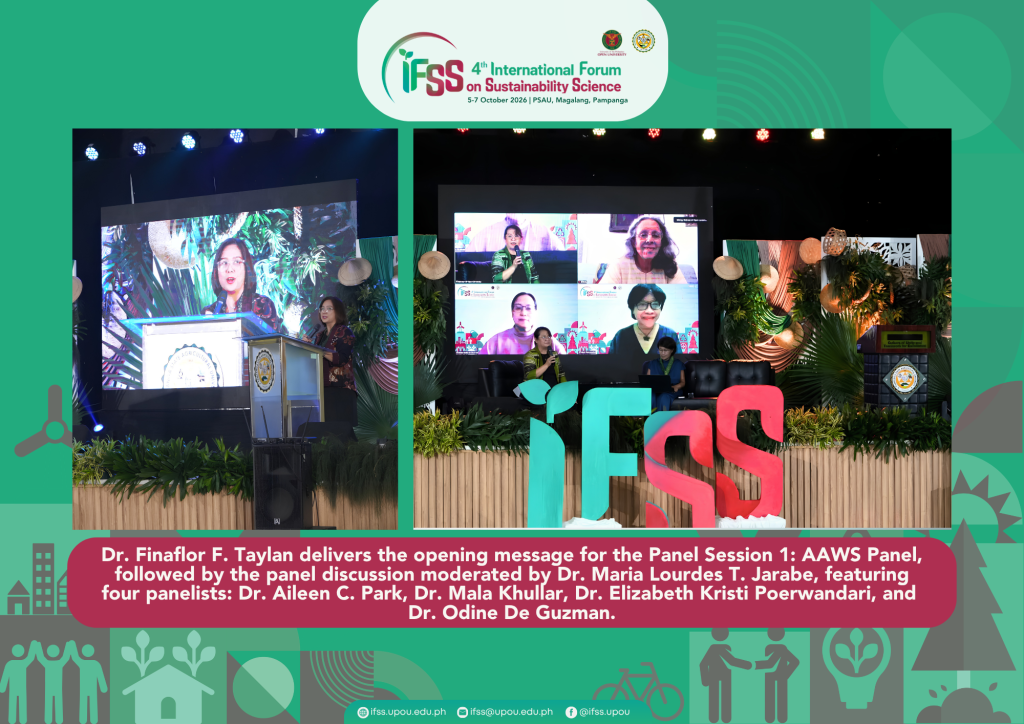
Written by: Denise Therese Anne A. Palisoc
AAWS Panel Highlights Gender-Inclusive Approaches to Sustainability at IFSS 2026
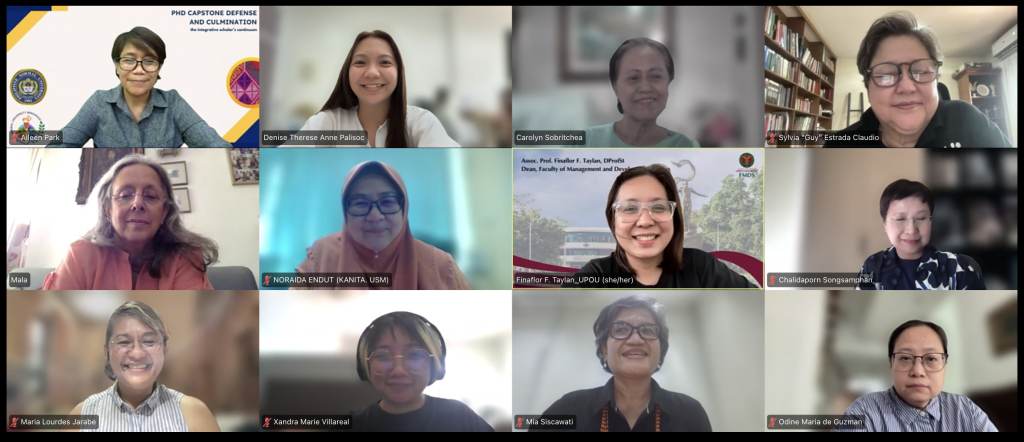
The Asian Association of Women’s Studies (AAWS) brought together scholars and gender and development practitioners for the panel “Co-Creating Gender-Inclusive Sustainability Transitions, Care Economies, and Resilient Asian Communities” on 5 October 2026 during the 4th International Forum on Sustainability Science (IFSS 2026) at Pampanga State Agricultural University (PSAU) in Magalang, Pampanga, with hybrid participation.
The session opened with a message from Dr. Finaflor F. Taylan, AAWS President and Dean of the Faculty of Management and Development Studies at the University of the Philippines Open University (UPOU). Emphasizing a people-centered approach to sustainability, she stated, “Sustainability is not only about the environment and technology; it is also about people, relationships, care, and equity, and ensuring that no one is really left behind.” She reaffirmed AAWS’s commitment to gender-responsive scholarship and encouraged participants to turn the exchange of ideas into meaningful action toward more inclusive and resilient Asian communities.
Moderated by Dr. Maria Lourdes T. Jarabe, AAWS Secretary General and Assistant Professor at UPOU, the panel featured four discussants: Dr. Aileen C. Park of Philippine Normal University Mindanao and Co-Vice-President of AAWS; Dr. Mala Khullar, an independent Gender and Development consultant from New Delhi, India; Dr. Elizabeth Kristi Poerwandari, Professor at Universitas Indonesia and an AAWS Council Member; and Dr. Odine De Guzman, Professor at the University of the Philippines Diliman. Their presentations examined how gender equality, care, education, psychology, and community knowledge shape sustainability transitions.
Panel Discussant 1: Floating Schools and Community Resilience
Dr. Aileen C. Park presented “Keeping Agusan Marsh Afloat,” co-authored with Amber Dea Marie P. Opeda. The study examined how seasonal flooding disrupts education among Indigenous Agusan Manobo communities in the Agusan Marsh Wildlife Sanctuary. Floating and stilt schools, flexible learning arrangements, and community partnerships help sustain education while addressing climate-related challenges.
Through the AFLOAT framework (Alliance to Foster Leadership in Optimizing Accountability in Teaching), the initiative promotes collaboration among schools, Indigenous leaders, and local governments. Dr. Park also highlighted the gendered burdens of unpaid care work and water transport faced by women and the need for context-responsive teacher education.
Reflecting on the gap between conventional teacher preparation and the realities of vulnerable communities, she observed, “I realized there is so much that I find as a disconnect between the mainstream teacher education curriculum and the reality of other schools like floating schools or stilt schools in the neighboring area like Agusan Marsh.”
Panel Discussant 2: Women, Care Work, and Employment
Dr. Mala Khullar presented “Are Women a Flexible Resource for Family and Work?” Her research explored the experiences of educated, middle-class women in India who leave formal employment to fulfill caregiving responsibilities. Women often manage childcare, support their children’s education, and care for aging parents while navigating career interruptions.
Dr. Khullar emphasized that women are frequently expected to find flexibility themselves rather than receive support from their workplaces. As she explained, “The flexible domain is really within themselves. It’s not as if the workplace becomes flexible for them. Flexibility is something which they have to find.” Her findings underscored the need for supportive employment policies and a more equitable distribution of paid and unpaid care work.
Panel Discussant 3: Psychology and Gender-Responsive Sustainability Science
Dr. Elizabeth Kristi Poerwandari presented “The Role of Psychology in Gender-Responsive Sustainable Science,” highlighting how psychology can help address gender stereotypes, understand environmental behavior, strengthen women’s leadership, and provide gender-sensitive psychosocial support following disasters.
“When we discuss sustainability, we often think of technological innovations, renewable energy, or climate policies. However, sustainability is fundamentally about human behavior,” she stated. Examples from Bangladesh and Indonesia demonstrated how gender norms influence climate adaptation, resource management, and disaster evacuation decisions.
Panel Discussant 4: Cultivating Ecologies of Care Through Humanities Education
Dr. Odine de Guzman presented the proposed instructional module “Everyday Humanities, Ecologies of Care: Adapting Feminist Care Theories and Practices of Popular Education toward Engaging Youth Participation in Sustainability Transitions.” Designed for a literature classroom, the module integrates feminist care ethics, ecological perspectives, and critical pedagogy through reading groups, discussion groups, and workshop laboratories.
The proposed course encourages students to critically examine gender, care, and environmental sustainability through literary analysis and collaborative learning. Dr. de Guzman said, “Caring for each other and for our home, the earth, is at this point one of the stronger paths towards a sustainable future,” emphasizing the importance of challenging established social values and cultivating more caring and ecologically responsible communities, highlighting the potential of humanities education to engage young people in sustainability transitions.
Advancing Inclusive Sustainability Transitions
The panel highlighted the interconnectedness of gender equality, care economies, education, psychology, and environmental resilience. Across their presentations, the discussants emphasized the need to address structural inequalities, recognize community knowledge, support caregivers, and strengthen women’s participation in decision-making.
Their contributions reinforced that sustainability requires more than technological innovation and environmental policies. It also depends on inclusive institutions, equitable employment opportunities, gender-responsive disaster preparedness, and a shared commitment to care and ecological responsibility.
The AAWS panel contributed to IFSS 2026’s broader commitment to collaborative sustainability science under the theme “Sumlag! Inclusive Sustainability Transitions through Co-creating Resilient Communities, Livelihoods, and Sustainable Destinations.”