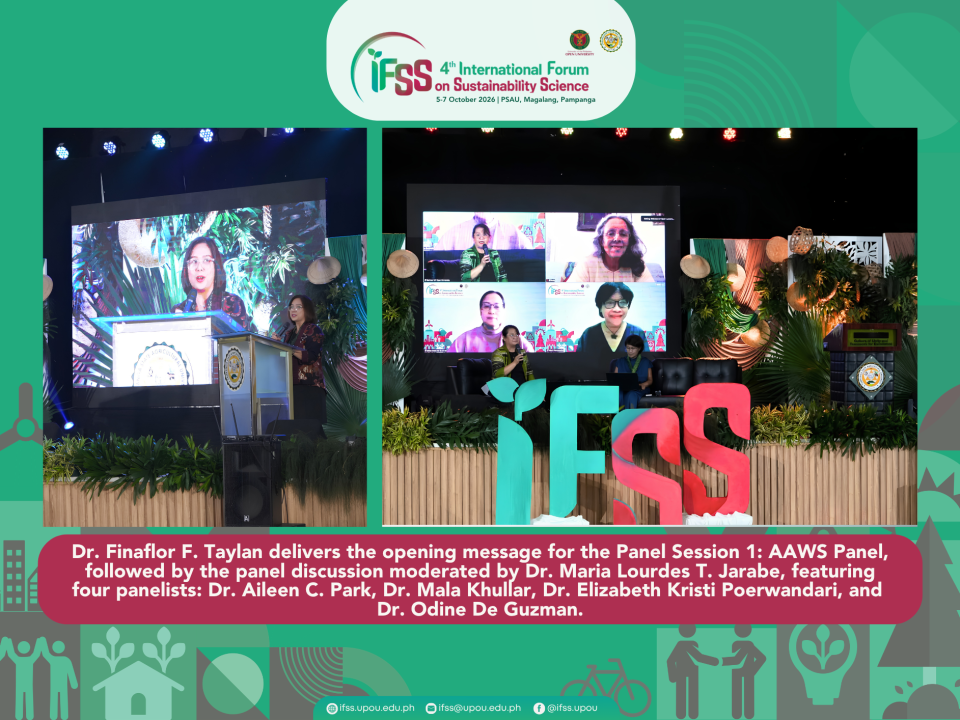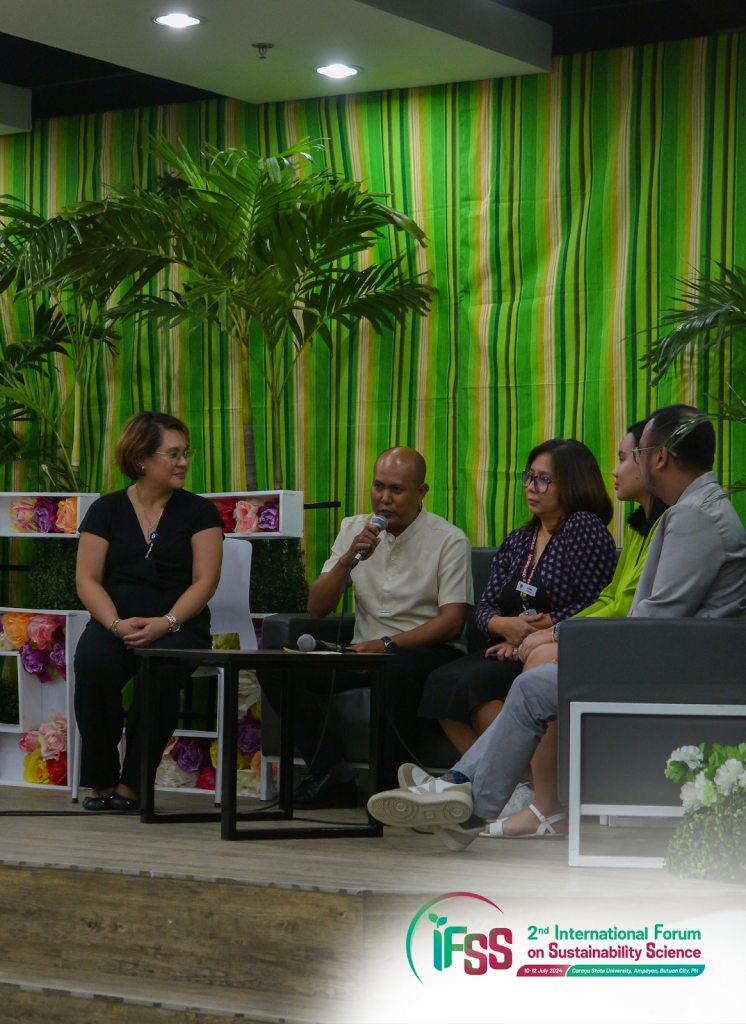

IFSS 2024: Parallel Session 7 with the theme Gender Inclusivity and Diversity for Sustainable Development
July 18, 2024
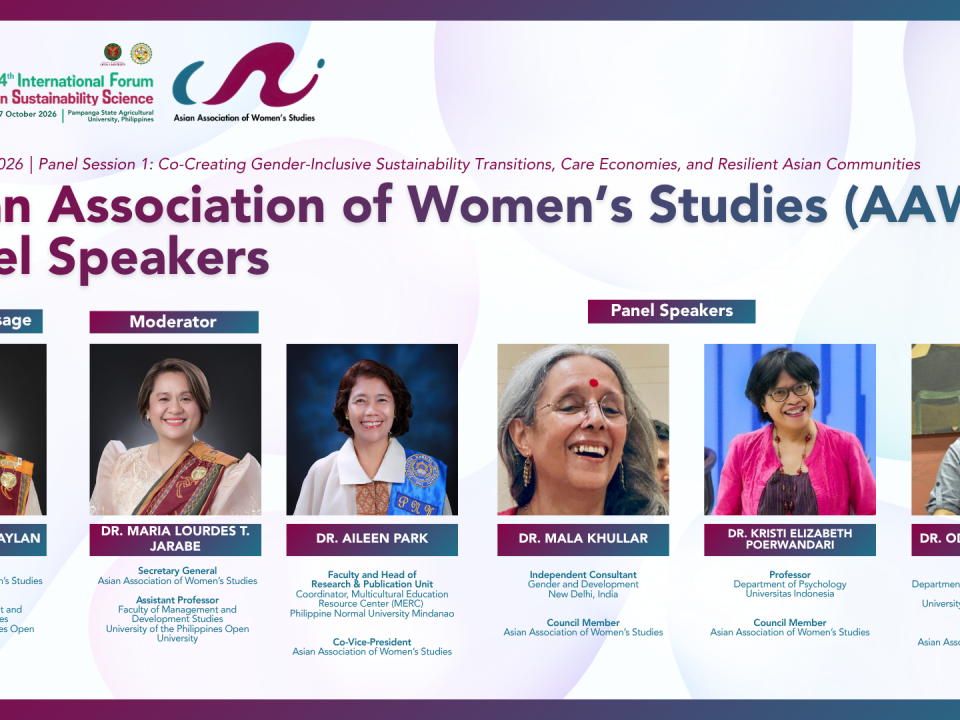
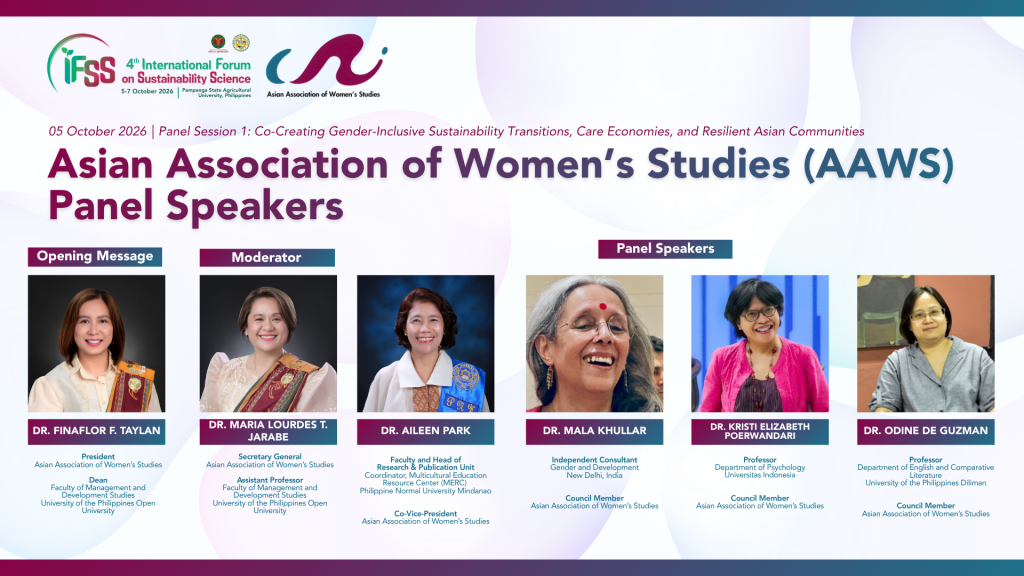
AAWS Panel to Highlight Gender-Inclusive Approaches to Sustainability at the 4th IFSS 2026
September 28, 2026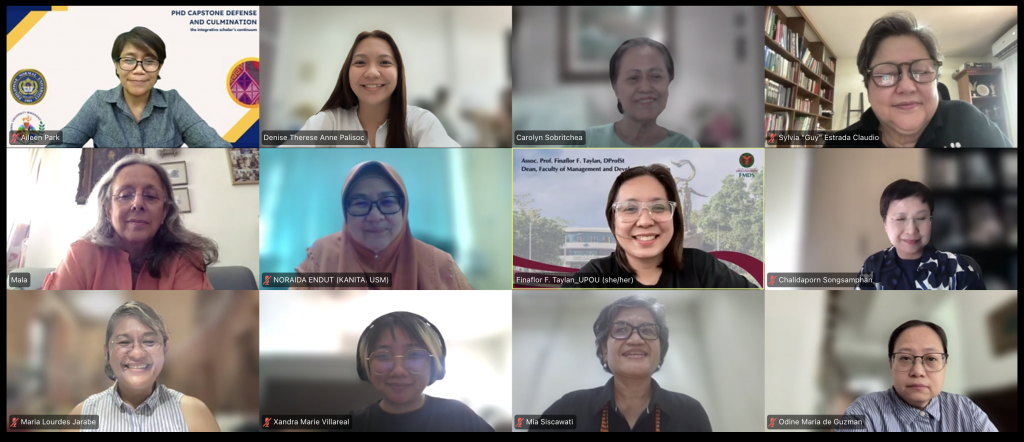
Written by: Denise Therese Anne A. Palisoc Edited by: Dr. Maria Lourdes T. Jarabe
The Asian Association of Women’s Studies (AAWS) convened its Council Meeting on April 16, 2026, bringing together 13 members to present and review accomplishments for 2023-2025, manage the leadership transition for the 2026-2028 term, and set priorities for the next term.
Among its major milestones was the successful hosting of the 7th AAWS Congress in 2025, which brought around 200 onsite and online participants composed of scholars and advocates across Asia, to engage in critical discussions on emerging issues in women’s and gender studies. Guided by the theme “Empower, Sustain, and Democratize: Asian Women’s Journey at the Intersection of Change,” the Congress featured a rich line-up of plenary, panel, and parallel sessions. These sessions explored pressing topics such as post-pandemic gender inequalities, diversity and multiculturalism, women’s climate justice, and intersectionality in Asian contexts. The event also provided a platform for student research through colloquia, as well as spaces for dialogue on queering perspectives and intergenerational feminist engagement. Overall, the Congress strengthened AAWS’s role as a regional hub for knowledge exchange, collaboration, and feminist dialogue.
During the deliberation on leadership transition, the Council prioritized continuity in governance as its central concern. It affirmed the extension of the terms of incumbent officials, Dr. Finaflor F. Taylan as president and Dr. Noraida Endut as VP, to sustain ongoing initiatives and preserve organizational momentum. To further strengthen leadership capacity, the Council also created a Co–Vice President position, to which Dr. Aileen Park was elected.
Council members likewise reviewed the activities undertaken during the term and discussed future directions for the organization. The discussion emphasized a stronger shift toward an Open and Distance e-Learning (ODeL)-focused approach for the organization, highlighting more flexible and digitally enabled modes of engagement.
In addition, the Council underscored the importance of drawing more young participants into the organization’s activities, particularly students and emerging scholars, to help ensure AAWS’s continuity, relevance, and long-term sustainability. Altogether, these directions reflect AAWS’s commitment to strengthening accessibility, fostering intergenerational engagement, and making feminist scholarship more inclusive throughout the region.